



Can you afford an international retirement living?
This post is from staff writer Jeffrey Steele.
On a recent trip to Guadalajara, Mexico, our hosts announced one Sunday they were taking us to a special place outside the city. We climbed into a van and motored an hour southeast, coming to a halt on the shores of Lake Chapala.
Mexico’s largest fresh-water lake, Chapala is a picture-postcard-worthy gem rimmed by quaint and historic towns, and known for its awesome sunsets.
After strolling the sun-washed malecon, a promenade ribboning along the shoreline in Chapala city, we climbed back in the van for a lakeside joyride. We were soon in Ajijic, one of the most popular retirement towns for North American ex-pats in all of Mexico. Pronounced a-HEE-heek — possibly for the self-satisfied giggles of U.S. retirees — Ajijic has emerged as the spot for folks dreaming of retiring in a resort setting, but at a fraction of what they’d fork out in the States.
I can’t recall what our guide said it would cost per month to live in Ajijic with a gorgeous lake view and the services of a maid, but I do recall the stunned gasps of us Yanks when we heard the tiny sum that passed the guide’s lips.
The perfect time
The vast differential between the cost of retirement here and in not-too-distant foreign countries hasn’t been lost on Panama City, Panama-based author Kathleen Peddicord. She’s the author of How to Retire Overseas (Penguin, 2010) and How to Buy Real Estate Overseas (Wiley, 2013).
“This is the perfect time for North Americans to be thinking about living, retiring and investing in real estate outside the United States,” she recently told me. “Many Baby Boomers about to become retirees are flat out worried they won’t be able to afford to stop working. And because American retirees are healthier than any before, they have a much longer retirement to pay for.”
While looking at more years in retirement, they’re also eyeing fewer retirement assets than they may have counted upon, she adds. “If they do the math as many people are doing, they’re saying, ‘How is this going to work?’ They answer for so many people is to look outside the box, and I’m speaking geographically. They might have considered Florida or Arizona in the past, but that’s not where they’re going to get the biggest bang in retirement.”
They need to look beyond North American borders, she says, and when they do it’s low cost of living that catches their attention. Options like Mexico, Panama, Ecuador, Belize, Nicaragua and Uruguay offer a good quality of life, for less.
“The point is to not have a lesser quality of life,” she says. “Why do that? You don’t have to. After working all your life, you don’t want to spend the rest of your days just making do. And overseas you can live much better than you can in the United States . . . Once you take the first step and start to realize the possibilities, you realize that not only are you going to stretch your budget and live better too, but this will be a lot of fun and allow you a spirit of discovery.
“This phase of life, which could have been spent just sitting in a rocking chair, becomes the best part of your life. You’re free to embrace all this opportunity that is now before you. It’s just a big adventure.”
Down Mexico way
For brevity sake, let’s look at the nearest of the countries mentioned above. While a bit more expensive than the others, Mexico is a “turnkey option” for many North Americans, Peddicord says, and offers a more comfortable life.
“Ajijic is a good example,” she adds, noting there are already so many retirees living there that there’s a ready-made upport system for freshly-retired newcomers. “But if you want a beach lifestyle, the beach community running north of Puerto Vallarta, which is called the Riviera Nayarit, is already well-developed. And it has a well-developed infrastructure, not only on a practical level of roads and communications and airports, but also from an amenities standpoint of golf courses, shopping, marinas and restaurants.”
The selection of beach condos is abundant, and all are dramatically less costly than on, say, the coast of California, Peddicord reports.
“Dramatically less expensive than California will be areas off the beach, and there are very interesting neighborhoods available. You can have a lifestyle very similar to the California coast in all regards, but especially in real estate.”
The clincher for many is the cost of health care. Depending on what country you retire to, the cost of health care can be 10 or 20 percent of what it is in the United States. Your U.S. health insurance and Medicare won’t cover you, but that needn’t stop you, according to Peddicord. “Good comprehensive health insurance can be gotten for $100 a month or less,” she says.
Whether you buy or rent, the cost of real estate in that region of Mexico will be a quarter to a third of something comparable in California, she adds.
We were just about to wrap up our Skype-enabled conversation when Peddicord dropped a number that will lead to dropped jaws among many Americans.
“The average American Social Security check comes to about $1,100 monthly,” she says. “And there are many places you can live on that alone.”
For more information, pick up Peddicord’s books and also visit her website, www.liveandinvestoverseas.com.
Then start packing your bags.
Modified on June 12th, 2013 - One Comment
Filed under: Retirement, Travel
How to help your family after you are gone
This post is from staff writer Suba Iyer.
Death. Nothing in this life is certain but that except death, but that is the one thing almost everyone prefers not to think about. It is depressing to think about our own demise. Why think about something that depresses you? Because it is not about me, it is about the loved ones I leave behind.
My husband will be an emotional wreck if I, well, leave him. Money will be the last thing he will think about at that time, but he has to eat. We have some dreams, some expensive dreams that we want to make a reality. That will cost him a lot of money. I will be doing him an injustice if I left him unable to pursue those dreams. I have been trying to put together a master information kit that has everything he needs in case of an emergency.
Essential but often overlooked estate planning documents
Advance health care directive form
When I went for surgery, the hospital gave me an advance health care directive form I could fill and get notarized. It had 5 different sections for me to fill out -
- Power of attorney for health care/Health care proxy: This part lets you name someone to make decisions about your health care if/when the doctor declares that you no longer can make/communicate your health care decisions.
- Living will: This section has information about your wishes about different end of life decisions, if you can no longer speak for yourself.
- Organ donation information
- Physician directive: A form that lets you designate a physician to have primary responsibility for your health care.
- Signature and witness form
From what I gather, it need not be all in the same form. Some people choose to do those individually with their attorney as part of their other estate planning documents. The power of attorney for health care and the living will put together are called an advance health care directive.
Will or (better) revocable living trust
A will is one of the most basic and most common estate planning documents. A will, at its simplest form, will dictate who will inherit your assets and who will become guardians for your children. Most estate planning attorneys will ask you to have a revocable living trust instead of a will to avoid probate and to give more detailed/complex instructions. Here is a great comparison of what wills and living trusts can do, and their pros/cons. At this point, all we have is a simple will that I made up myself. When our net worth hits a certain point or if we have a child, we will consult a lawyer to have a more robust living trust in place. A will is very easy to make, so even if you feel you don’t have assets significant enough to warrant meeting with a lawyer and setting up a living trust, at the very least, draft a will.
HIPAA release form
HIPAA was created to protect the privacy of the individual, but it also makes it difficult for family members to discuss your health care and/or deal with insurance on your behalf at a time when you cannot do so.
Financial durable power of attorney
A simple power of attorney document lets you appoint someone you trust to handle important financial and legal matters on your behalf, but it becomes ineffective if you die or become incapacitated. You need to have a durable power of attorney if you want the power of attorney to continue to be effective even if you become incapacitated or incompetent. Durable power ends upon death.
If you want to use a lawyer to draft any of these documents the American Bar Association offers a search and referral tool to look up lawyers in your state and Nolo has an extensive lawyer directory categorized by practice area and state.
My life information organizer
It took me almost two years to compile all this information in one place. This is a big binder of information about, well, pretty much everything in our life, divided into multiple areas.
- Personal (personal information, passport information, previous addresses)
- Emergency (emergency Plans, emergency contacts)
- Digital (email accounts, passwords and login information, data backup plans)
- Bank (bank accounts, account types, balance, account Numbers, username and password hints)
- Career (current resume, employment history, education history, transcripts)
- Insurance (life insurance, health insurance, car insurance, homeowner/renter insurance)
- Medical (doctor information/contact, medical summary [allergies, blood group, etc.], prescription medications, family medical history)
- Life (organ and body donation, final arrangements, estate plans, funeral receipts)
- Credit card (account numbers, username/password hints, payment information)
- Investments and retirement (investment accounts, retirement accounts, businesses, real estate investments, safe deposit box information, inventory)
- Proof of ownership (house documents, car title)
- Debt (debt owed to you, debt you owe)
- Family (marriage /divorce certificates, birth certificates)
- Charity (trust information, directions for the trust operation)
Other things to look into
Beneficiaries
Make sure the beneficiary information is up to date for all your accounts.
Life insurance
This is one thing we are still lacking. Yes, we don’t have life insurance. I have been meaning to get term life insurance but keep procrastinating. Until early last year, both of us were working and we didn’t have any kids. I was planning to get a policy when we have kids, but now debating getting a policy even before having a child. Hopefully, I can get this done by the end of the year.
It is not a fun or even a comfortable exercise, but we owe it to our loved ones to make this as easy as possible. What end-of-life planning tools have you used? Do you feel peace of mind with these directives in place, or have you yet to establish your wishes?
Modified on June 10th, 2013 - One Comment
Filed under: Family & Life, Planning
Will Social Security be gone before I retire?
This is a guest post by Leslie Kramer from our partners at LearnVest.
Social Security benefits used to be something that all tax-paying workers could count on. A portion of your pay would be automatically deducted from your paycheck, through the payroll tax, and in return you would reap the benefits of the program when it came time for you to retire.
For many decades the program worked well. “Today’s employees would raise the revenue to pay current retirees, and were assured that when their time to retire came, the current employees of the day would pay into the system to finance their retirement,” explained Olivia S. Mitchell, director of the Pension Research Council at the Wharton School of the University of Pennsylvania.
Why is Social Security running out?
But due to the recent financial crisis and recession that ensued, as well as the current high unemployment rate and an aging Baby Boomer population, many of whom are expected to live way past age 65, there will soon be insufficient money coming in from payroll tax revenue to pay out Social Security benefits to expecting retirement recipients. This has many people worried about the overall future of the system and whether Social Security will be there for them, when it’s their turn to retire.
For Social Security to continue to exist as it does today, there will need to be a major overhaul in the program. Congress must figure out a way to reconcile the expected deficit in the program. Otherwise, it will have to resort to paying out less in benefits than it previously had.
That means that instead of relying on Social Security as a way to support their retirement, people will have to depend on their own savings and investments, says Ellen Derrick, certified financial planner™ with Learnvest Planning Services. “People need to ask themselves: ‘What can I do now to make sure I am protecting myself for the future, a future that may not include Social Security?’” she says.
According to forecasts made by the Social Security Board of Trustees, there should be enough money coming into the program to pay out only about three quarters of total expected benefits starting in the year 2032. “So if you were to receive $1,000 a month, it is projected that you would only receive $750 a month instead,” says Derrick. “Those benefits should be intact through the year 2086,” she notes.
Part of the reason this may occur: “The law says that the Social Security administration can only pay benefits up to the amount of revenue that it has, so if it’s insufficient, the government will have to figure out new solutions if it does not want to cut payments,” explains Mitchell. And that will take a big change in policy.
How you can prepare yourself
So what can you do now to prepare yourself for the possibility that the full amount of Social Security benefits won’t be there when it’s your time to retire?
The simplest answer is to keep working. For those people already retired or close to retiring, you don’t need to worry— your benefits are secured. “But if you’re 10 years away from retirement, it’s time to buckle down,” says Derrick. As a financial planner, she tells her clients who are age 55 and younger that they should not even include Social Security in their retirement planning calculations. “If you do get it, it will most likely be a smaller amount than what you are currently being promised,” she says.
Many financial planners are advising people to keep working and retire later than they may have originally planned. “It’s helpful to delay retirement until as late as possible,” says Mitchell. In fact, there are already added benefits built into the Social Security system if you defer claiming benefits until age 70 instead of age 62. “Your monthly benefit could go up by as much as 76%,” she says. It is important to realize that the age you take your social security benefit can vary from person to person. This is a topic you should visit with your financial professional to select the time that is right for you.
How much you’ll need to save
Mitchell also recommends that people start saving more while they are still working, and spend less. The recommended percentage of one’s paycheck that people should invest in a retirement fund varies greatly according to age and circumstances, but many financial planners advocate putting in between 10% and 20%. The more you can save, the better, Mitchell advises. Another factor is that many people today are living a lot longer than they used to. “Longevity is increasing, and it is expected that people may soon start living to over 100,” she notes. That means many more years of savings will be needed over the course of your lifetime.
Another tip: Everyone who is offered a 401(k) retirement plan from his or her employer, with a contribution-matching program, should take it. It’s free money! If you’re self-employed, setting up a traditional IRA or Roth IRA account or an individual 401(k) account is key. If possible, you should contribute the maximum amount those plans allow each year. “Even if you are a stay-at-home mom, you can set up an IRA in your name and deposit income coming in from your spouse,” Derrick advises.
What else you can do to stay on track
Staying healthy is another way to protect yourself now for later on in life. “You should be investing in your mental and physical health, because that is your capital,” Mitchell says. Good health will help you be able to work longer and hopefully reduce medical expenses when you are in your retirement years.
She also suggests that people start to think about their social capital, which includes friends, neighbors, community and family. “In the old days, when parents would grow old, they would move in with their kids, but that has changed,” Mitchell says. Today, if you have friends and family who can help you, it may allow you to remain out of a nursing home and in your own home longer, which will be less expensive later in life,” she explains.
Continuing to work part-time, even in retirement, is another good idea. “People who work part-time remain mentally alert and connected to friends. It is another aspect of successful aging,” she says.
Derrick also recommends that workers check to see if their retirement account is on track for where they thought it would be, at least once a year. “If it’s not, you should adjust your contributions, especially if you get a raise or a new job that could make a significant difference in your salary,” she says. At times you may find that you have to rearrange your savings rate to take care of a child’s needs or to set up a college fund. “But at the same time, you don’t want to sacrifice your own retirement; you want to weigh those priorities,” says Derrick, and avoid these top retirement mistakes.
The earlier you start saving for your retirement, the better, even if it’s a just small amount at first. “People come up with all sorts of reasons to put off saving for their retirement, but retirement is the one thing you can make the biggest difference with if you start saving early on,” Derrick notes. That’s because the earlier you start, the more time you have to let your money grow.
Additional stories from LearnVest:
The secret of retirement savings: You can’t make up for lost time
What’s the best age to begin claiming Social Security benefits?
Refund, or no refund?
This post is from new staff writer William Cowie.
How do you approach your income tax withholding? Do you opt for a higher withholding in order to get a refund, like 85 percent of all Americans (according to a recent survey)? Or do you go for the minimum and pay in when you file your taxes? Most articles you read on this topic appear in April, but isn’t that a little late to do something about it?
Instead, let’s look at the issue before tax time is upon us again.
Skip the refund
Several personal finance bloggers, like Luke Landes at Consumerism Commentary and J.D. Roth at Get Rich Slowly, say opting for larger withholding to get a refund is not the smartest choice. Although there are some who say it’s neither good nor bad to over-withhold, a casual survey of the personal finance blogosphere shows most say the refund way is a bad way to go, and here’s why:
1. Interest
You don’t earn any interest on money you give the government before you need to. Why would you let someone else sit on what is really your money when you could be putting that somewhere and earning interest on it?
2. Out of reach
The future hasn’t stopped being uncertain. What would happen if something unforeseen came up and you need the money? Your government is not going to have an sympathetic ear and let you have that money back.
3. You can save properly yourself
In other words, if a savings account is what you want, you have many better options than leaving the money in Uncle Sam’s care.
4. You might just spend the refund windfall
When you drill down into this one, it’s like the opposite of the previous argument, which says you’re smart enough to save wisely. This argument says no, you might not save that expected windfall. You might squander it, you reckless rascal you!
5. You’re missing out on investment opportunities
You could be investing your money and earning big bucks while waiting to file your return, instead of letting it just languish there in some government account earning zip… an expansion of #1 above.
6. What’s the government doing with it?
This line of reasoning goes something like this: government is bad, big government even worse. What are they going to be doing with your money? Like the ingredients of bologna or summer sausage, you really don’t want to know. So don’t give it to them unless they come and pry it out of you with an April 15 deadline.
Go for the refund
For some reason, almost no experts take the view that it’s smart to opt for larger tax withholding in order to get a refund. What this debate amounts to, then, is the experts vs. the masses, because, as noted above, 85 percent of us, the masses, think the refund strategy is the way to go.
Why do we listen to the experts and then have the nerve to do exactly the opposite? Is it because we are just not smart enough, or may there a method to our madness?
I believe there is a method, and it’s not madness at all.
1. Interest foregone is immaterial
Exactly how much interest do you forego by giving the government more money and then getting it back? Let’s say, for the sake of argument, that your refund is $1,200, and you get that because you, inadvertently or on purpose, have $100 a month too much deducted for your income tax. If your savings account pays you 1 percent per year (about average these days) the grand total of interest you are sacrificing for your folly is $6.50 — that’s less than a single Big Mac meal.
2. The penalty
In the opposite corner of the interest you lose is the penalty you run the risk of paying. Most commentators are strangely silent about this issue. I don’t know why, because in my book this is huge. How do I know that? It hit me one year when just a few unusual items, like a prior year state tax refund, pushed my Federal tax liability over the amount that was withheld. Uncle Sam doesn’t like that, so much so that he whacks you with a penalty of 10 penalty.
That’s a whole lot more than you will earn on any savings account!
Here’s the fundamental problem: our taxes are hard to track during a year. The government doesn’t send you a statement, like you get for your 401(k) for example, to tell you where you stand. If you get any income beyond a simple paycheck, you’re in murky water.
It’s just not worth the risk, I decided, so I went from sailing close to the wind to over-withholding.
That’s when I discovered several other benefits not too many people talk about.
3. Incentive to file early
Every year I was among the hordes who scrambled around in early April to get my taxes mailed off before the dreaded 15th deadline.
No more.
Now that I know I’m gonna get a refund, I let my imperfection run free. Like a kid, I’m on my taxes early to get my money, and by the time others do the April scramble, I’m counting my refund bucks like Scrooge McDuck. The previous pain and drag became an annual treasure hunt.
Is that so bad?
4. Big budget
If you’re a home owner, you’re well acquainted with the myth that a home is an investment. You know the truth: a home is nothing but an insatiable money pit. Every year there’s something: new roof, new fence, exterior repainting….
I know, the experts say you should be perfect and save for those things properly, with a real savings account. You know, the type that pays a fraction of a percent in interest each year. So, every year, when we get our refund, we see how much it is, and then we see which holes we can plug this year with what has become our “annual budget.”
After we celebrate with a nice dinner, of course.
We still have an emergency account and we still save up for special things, but what’s so terrible about turning the necessity of filing taxes from an unpleasant event to a nice one? While recklessly blowing off all of fifty four cents a month?
Nobody has been able to answer that one yet.
5. It’s right after Christmas
For many people, those big circles of friends, family and extended family mean they buy a lot gifts over Christmas, including some last minute surprises for people who invite them to a Christmas dinner, but for which they didn’t plan by buying gifts on sale after last year’s Christmas.
I don’t know about you, but come the New Year, all our money fountains are cleaned out. Should that happen to perfectly planning people? Probably not. Does it happen? I’ll let you answer that one.
And so, rather than beat myself up trying to be perfect, I follow a system that works very well, one which turns my imperfection into an asset, not a liability.
I like the idea that soon after Christmas, I know that tax money will be coming in, not going out.
Conclusion
With apologies to the well-known MasterCard ad:
- Interest foregone by letting Uncle Sam hold onto my money: $6.50
- Priority Mail postage to get my return in early: $5.95
- Peace of mind, knowing I will get money, not pay it: Priceless
Which strategy do you follow? Why?
This battle of the sexes has no winner
This post is from staff writer Richard Barrington.
Information services company Experian recently released a study comparing the debt status of men and women. The angle Experian highlighted for their press release was that the study demonstrated that women are better at handling their finances then men, and indeed, the numbers bear this out to some degree. But that’s not the most striking thing about the study.
Actually, a couple things struck me when I looked at the numbers. The first thing is how surprisingly similar the credit status of men and women actually is. The second thing is that neither set of numbers looks especially good.
Credit differences between men and women
Here are some of the contrasts highlighted by the Experian study:
- Men tend to opt for larger mortgages than women, with an average origination amount for men of $187,245 compared to $178,140.
- Men also carry larger non-mortgage debt balances than women. Between credit cards, auto loans and personal loans, men owe an average of $26,227, and women owe an average of $25,095.
- Men use more of their available credit card limits, at 31 percent of available credit compared to 30 percent for women.
- Men are more likely to be more than 60 days late with their mortgage payments. This delinquency rate is 5.7 percent for men, compared to 5.3 percent for women (these figures include mortgages issued independently to men or women, and not joint mortgages).
- Men’s credit scores are a little lower on average than women’s. Men had an average score of 674, while women had an average of 675.
Now, I look at financial data almost daily, and I’m used to discerning the significance in fairly subtle numerical differences. Still, I have to say, most of the above differences do not strike me as significant at all — especially the single point differences in credit scores and credit utilization ratios.
Even the apparently larger differences in mortgage size and consumer debt outstanding amount to less than 5 percent. To put that in perspective, as Experian points out in its press release, women working full-time earn 23 percent less than men. You could argue, then, that men tend to take on lower debt burdens than women relative to their respective incomes.
On the other hand, women should get credit for having lower mortgage delinquency rates despite their lower incomes. The point is, as I parse these numbers, I find more similarities than differences, with some mild advantages on either side. What bothers me, though, is what the numbers say about the financial management of both men and women.
Why nobody wins
While you can argue about whether or not the Experian survey shows that women really do manage their money better than men do, what’s clear from the data is that neither sex does a particularly good job. Just think about some of the numbers posted above.
First of all, there’s that personal debt burden of $26,227 for men and $25,095 for women. Remember, that doesn’t include mortgages. People with debt burdens like that will take a long time to climb out of the hole; it will likely be even longer before they can start to amass some serious retirement savings.
Second, large as those debt totals are, both men and women have only used about a third of their available credit. That means that credit card companies are content to let these people go even more heavily into debt.
Finally, there are those average credit scores of 674 and 675. These are both well below the threshold of 700 which Experian defines as an indication of good credit management. In other words, the average American, whether man or woman, does not show good credit management and is likely to have to pay higher interest rates as a result.
A good time to pay down debt
One of the obstacles to advising people to pay down debt is that by lowering interest rates so drastically, the Federal Reserve has done everything in its power to make borrowing attractive and saving unattractive. However, a closer look at interest rates shows that not all interest on debt is particularly attractive.
For example, since the end of 2008 credit card rates have fallen by an average of just 0.56 percent. That’s not such a good deal, and in a world of 3.5 percent mortgage rates and 0.10 percent savings account rates, 13 percent credit card rates seem out of step.
Besides that, with interest rates rising lately, this is an especially good time to pay down variable-rate debt. Those who don’t will see their debt burdens become more difficult to manage.
Higher expectations
When men and/or women start showing more reasonable debt burdens and higher credit scores, we can start arguing about whether one sex is better than the other when it comes to financial management. In the meantime, both get a failing grade, so arguing about differences seems relatively trivial.
Modified on June 6th, 2013 - 4 Comments
Filed under: Credit Cards, Debt Reduction, Mortgages, Polls
What to look for when buying an energy-efficient home
This post by Krissy Schwab comes from our partner site at QuickenLoans.com.
A study released in February of 2013 by the National Association of Home Builders says one of the most important qualities new home buyers want is an energy-efficient home. They add, “Nine out of ten buyers would rather buy a home with energy-efficient features and permanently lower utility bills than one without those features that costs 2 to 3 percent less.”
The problem is that some sellers boast “energy-efficiency” without really having the goods to back it up. And just because the home has energy-efficient appliances doesn’t necessarily mean it’s saving energy in other areas.
Having a holistic approach to energy-efficient homes is a much better way to go for both savings and reduction in energy dependency. So when you start your house hunting adventures, bring this list with you and look for these features:
- ENERGY STAR appliances
- Air leaks around windows and doors
- Energy-efficient windows and doors
- Low-flow fixtures and toilets
- Digital thermostat controls
- Properly insulated attics and walls
- Low-energy lighting systems
- Well-maintained heating and cooling system
- Eco-friendly carpet, paint and building materials
- Energy- or water-efficient landscaping plan
- Tankless water heater
- BONUS: solar panels, geothermal system, wind turbine or any other alternative energy source
After you’ve gone through the list above you’ll want to ask some these questions:
- When was the last energy audit conducted and can you see the results?
- Can you see past energy bills?
- Do you have maintenance records for any of the energy-efficient appliances or alternative energy sources?
- Are there any local or state tax credits for owning this home?
- Do local energy companies buy back energy created by my home?
- Does the current homeowner work with the ENERGY STAR home program?
LEED Home Certification
In some cases, homes will feature LEED certification as a key selling point. A home with LEED certification means that it met specific environmental standards established by U.S. Green Building Council (USGBC). Ask to see the documentation from their LEED inspection and the certification.
Your new energy-efficient home doesn’t have to have all of these qualities, but each of them can help lower your energy dependency and monthly bills. Not only are these types of homes a smart buy, but energy-efficient features can also increase your home’s value if you decide to sell the home later on.
In July of 2012, USA Today reported that homes featuring energy-efficient upgrades sold for 10% more than non-energy-efficient homes in the surrounding area. They added in an earlier story that, “In Seattle, homes certified as eco-friendly sold for 8.5 percent more per square foot and were on the market 22 percent less time than other homes, according to a new report that tracks new home sales from September 2007 through December 2009.”
Buying an energy-efficient home is a smart investment that can pay off each month and later in the future. Just make sure to ask the right questions and look for the right features so you don’t get stuck in a home that doesn’t meet your expectations.
See more articles from QuickenLoans.com:
Hold the Phone! Beware of Phony Medical Alert Companies
Mortgage Missteps: The Too-Good-to-Be-True Deal
The hidden savings in a rent payment
This post is from staff writer Jeffrey Steele.
The scene was a sidewalk café on Chicago’s northwest side one summery evening around 2006. I’d been joined for dinner by a couple friends, Grant and Kate, and between bites of chicken Vesuvio – or was it a chopped salad? — was enjoying the witty, intelligent repartee of my two companions.
There was a lull in the conversation, and then Kate turned to Grant, the only renter among the three of us. “So, when are you going to join us among the ranks of homeowners?” she asked, in a tone of innocent inquisitiveness.
I expected Grant to offer a timetable for home purchase. But he instead responded as if Kate had impugned his ethnicity, or had scorned his mother’s good name. It was clear he was very sensitive about his renter status.
His deeply wounded reaction was a reflection of the era. It was the day and age when folks from teenagers on up were jumping at the chance to scoop up homes put within reach by zero-down payments and teaser-rate mortgages. Some felt if you were still renting in such an environment, you weren’t part of the club. You were an outcast, a pariah, and seemingly one of life’s most pathetic sad sacks.
Judging from his response, I think Grant himself held that view.
But, as events were soon to show, Grant wasn’t behind the times. He was ahead of them. Just a year or two later, the mortgage meltdown would throw many overextended new homeowners into foreclosure. Suddenly, renting became not just acceptable, but the hip, trendy, now thing to do. By shunning the temptation to join the home-buying binge, Grant had been crazy like a fox.
Renters by choice
Even in these times, when new apartment buildings are sprouting like late-spring clover to meet the surging population of renters, some still believe apartment life means simply throwing money down the drain every month.
But the expanding legions of renters by choice are convinced otherwise. Driven by a desire to enjoy life in ways you can’t when anchored to a ranch or split-level, they realize renting gives them opportunities homeowners don’t enjoy.
They can turn maintenance chores over to their landlords, have their building’s staff pick up their dry cleaning, and attend apartment building parties, meet their neighbors and make new friends. They can also pursue exciting job offers across country, without having to fret about the details of selling a home.
Beyond these renting advantages, there are a slew of economies that await the shrewd apartment resident who selects the right rental property. A partial list of such money savers might look something like this:
Apartment building fitness centers. Joining a health club can set you back plenty, but at a great number of apartment communities, particularly newer ones, the chance to work out comes on the house, so to speak. With your club just a few floors away on an elevator, you’re saving gas and wear and tear on a vehicle, too. Apartment communities lacking in-house fitness centers often give residents complimentary memberships at nearby facilities. “Gym memberships can cost upwards of $100 a month, so having your gym included with your rent is a significant savings,” says Diana Pittro, executive vice-president of RMK Management Corp., which manages dozens of Chicago area communities.
Business centers. Outfit a home office, and you’ll shell out big bucks for a computer, printer, Internet access, desk, office supplies and far more. But at many apartment communities, a welcoming business center offers residents all those necessities, at no extra cost. Moreover, home-based entrepreneurs who need to meet clients in a business-like setting appreciate the conference rooms available to residents in many apartment community business centers.
Says Barbara J. Geffen, co-CEO of Northbrook, Ill.-based Prime Property Investors, owner of two Northeast Illinois apartment communities: “Our business centers are appreciated by a variety of our residents, from casual online browsers to professionals who work from home.”
Swimming pool. Imagine the expense of installing your own in-ground swimming pool, then furnishing it with deck chairs, cabanas and pool cover, not to mention a summer’s supply of chlorine and pool chemicals. Now think of the time you’d spend keeping the pool in ship shape. It would be like a second job.
But many rental properties give residents access to well-maintained pools with all the above extras. Some of the more spectacular sparkle like jewels on high-rise rooftops, and the awesome view comes at no additional charge.
Grilling stations. At many apartment communities, there’s no need to invest in a grill, propane or charcoal. The grilling station on premise is open to residents who need only show up with their favorite foods, grill and open wide. As many renters will attest, grilling is even more tasty when it’s free.
More ways to save. These are just the start of the money savers you’ll find at a large number of newer apartment communities. Additional ones include free dog washes, car washes, on-site community rooms, party rooms and theater rooms, discounts at area stores and restaurants, cooking classes, dancing lessons, wine-and-cheese get-togethers, catered holiday parties, discounted food deliveries and low-price premium cable packages, to name a few of the ways to economize.
As I mentioned up top, I’m a homeowner myself. But I get a bit envious when I tour one of the amenity-laden apartment communities being opened to today’s renters. As tempting as all the above economies seem, it’s the simple, joyful, carefree lifestyle renters enjoy that is so undeniably attractive.
No wonder many people returning to renting report they feel as if they haven’t just taken on a new lease, but a new lease on life.
How to save money on vacations using social media and new technologies
This post is from staff writer Suba Iyer.
Memorial Day weekend has officially kicked off the summer travel season. The wet weather is Portland, Ore. is making me dream of all the sunny vacations I could possibly take. I almost planned a last-minute vacation for the Memorial Day weekend and had to take a pause to rethink whether we can afford to actually spend what I was planning to spend.
The answer is no, we have a lot of expenses coming up this summer; we cannot afford to take an expensive vacation without any planning. But that doesn’t mean I am going to put my life on hold. I am planning to take at least two weekend or long weekend trips every month this summer. Most of it will be road trips with a couple of long distance trips thrown in. We plan to make it affordable by using every single resource available to us to get us the best value for our money.
Ways to save money on vacations has evolved a lot with the ever-changing technology and new media. The tried and true tips still work, if you want to brush up on them, here are a few posts from Nickel - How to save money on vacations, Saving money on travel, Eight ways to stretch your vacation dollar and More tips for saving money on vacation travel.
What I will be covering in this post is how to take advantage of new technology advances and social media to get better value for the money.
Image credit : Jason Howie
How to save money on vacation using social media
Tweet and follow the savings
I have a love and hate relationship with Twitter. I hate it when people tweet every single thing they do, but I can’t say I don’t love the savings and the customer service I get via Twitter.
- Coupons and deals: These days the best way to get notification for great deals or coupons is to follow the airline, hotel and rental companies. All the online deal sites (like Airfarewatchdog) have a Twitter presence too. Create a separate list for travel related tweets, this will keep your inbox clean and still give you a summary of deals available for the day.
- Better customer service: I have gotten better rooms by tweeting about my stay at hotels. I have also expedited my refund request for a cancelled flight by contacting customer service via Twitter. Companies are trying to keep their social image clean, so instead of emailing, filling out a contact form or waiting forever on the phone to get hold of a human, tweeting has been a great way to connect with customer service.
Treasure hunt on Foursquare or Facebook Places
- Unlock destination deals: When you get to a restaurant, new city or any store, if you are willing to let everyone know that you are there and check-in, Foursquare and Facebook Places will offer you customized savings deals for that specific place that you can use right away.
- Receive bonus points or rewards: Some companies will offer you bonus points (for their loyalty program) if you check-in via Foursquare or other social media outlets. For example, Starwood Hotels offers bonus Starpoints if you check-in via Foursquare or Facebook.
Plan your vacation via Pinterest, Yelp & Facebook
- Figure out where to vacation: Pinterest has been my latest time sink. I like browsing boards where people have pinned places they would like to visit. With so many photos from very different sources, I can get a great overview of any place. I do not have to rely on professional photos and later be disappointed. After virtual touring, I then create alerts for my favorite places via various online tools to see if I can grab a great deal on them.
- Make sure to avoid tourist traps: Yelp and Facebook are great places to ask questions. By combining suggestions from your friends and strangers, you can plan your trip, avoiding tourist traps and hit hidden treasures.
Smart savings at your finger tips
If you have a smartphone but are not taking advantage of the savings via apps, you are missing out. Here are some apps that I love.
- Gas Buddy: A popular app to find the best gas prices. It uses the GPS in your phone to find all the gas stations and the prices in your location in real time. (Available on iPhone and Android)
- Skype, WhatsApp and Viber: I personally use Skype to make calls via WiFi instead of using roaming minutes. There are other apps like WhatsApp that allows you message anyone without any fees (They do charge $0.99 either one time or yearly as a subscription fee depending on the type of phone). Viber that lets you talk to or message other Viber users for free.
- GetAround or Lyft: Instead of renting a car for the whole day or taking the cab, you can give your business to a local by renting from them or getting a lift from them. You can locate your ride by using these apps. If you frequently rent a car hourly, Zipcar and Hertz 24/7 might be a great fit for you.
- Yelp: You can check out reviews of any restaurant and get recommendations on what to order.
- Blackboard eats or Scoutmob: If you are visiting a major city, chances are you can find great deals on restaurants (10-50 percent off) through these apps. There are always social deal sites like Groupon or Living Social to get restaurant vouchers to try new restaurants.
- Eat out with Kids: If you have kids this is a great app to have. You can find kids-eat-free places or restaurants with discounted kids’ meals.
- Expensify: Keep track of your spending to make sure you are on track with your budget. If you have to expense any part of your trip, this app makes that task very easy as well.
Get online and save money
- Yapta: Have you ever seen the prices go down just after you book the trip? A lot of companies price match their own prices but you have to do the due diligence and keep checking the prices to see if they have gone down so that you can ask for a price match. Yapta does this for you. You enter you trip details – flight, hotel, rental car and the software will keep checking the prices for you. You will be notified if the prices go down and you can submit the price match request to your airline. This way you can be sure you are not overpaying for the trip just because you booked it a day early.
- TripIt: Keep the entire itinerary and the confirmation numbers in one place so you don’t miss anything.
- Tripadvisor and FindMeetGo: Tripadvisor is an excellent place to start your research, ask for advice on places to visit and refine trip plans. FindMeetGo is a new tool I am planning to use this summer to find other travelers visiting the same location at the same time you are visiting. You can team up, share tips and make your trip more fun.
- Blogs: There are plenty of blogs that focus on individual cities with a treasure trove of information on great places to visit or free things to do in a city.
While this isn’t a comprehensive list, I wanted to highlight the potential for saving a lot on travel by using all the online and mobile resources that are available to us. These are some of the tools that I use to make my travel more affordable.
How do you use the latest technology and social media to save money on your vacations? What are your favorite apps to save money?
How to budget without regular paychecks

This post, written by Michelle Sheiman, is from our partner site LearnVest.
Successful budgeting tends to depend on two things: careful planning and a steady income.
The first, anyone can do. The second isn’t so simple.
If you’re self-employed, you might be asking yourself: “But I don’t have a regular paycheck coming in. Can I even set up a budget? Should I bother?”
You can. And, yes, you should.
A budget is simply a way of figuring out how much money you need to go about your daily life, and arranging things so that you don’t exceed that number. No matter your situation, budgeting is a critical part of making sure your finances are sustainable. (And it no longer requires a pen and paper: The free LearnVest Money Center and corresponding app will do it for you automatically.)
Budgeting is especially important if your income is irregular, such as if you’re a freelancer, a temp worker, a consultant, an artist, a permanent employee with fluctuating hours, or a commissioned salesperson. Or if you do seasonal work, if a big part of your income depends on tips, if you own a small or startup business, if you’re on call, or if you are simply an odd-jobber, then this article is for you.
Use this simple three-step plan to set up a budget you can stick with. For more guidance, LearnVest offers low-cost financial plans, put together by our certified financial planners™.
Step one: Know your baseline
When you have a steady paycheck and a predictable income, you budget by allocating spending categories within that limit. But those with unpredictable incomes must work “backward” — starting with the amount of money you’ll spend to figure out how much you need. If your income is unstable, then it is your expenditures that must be stable, predictable and repeatable.
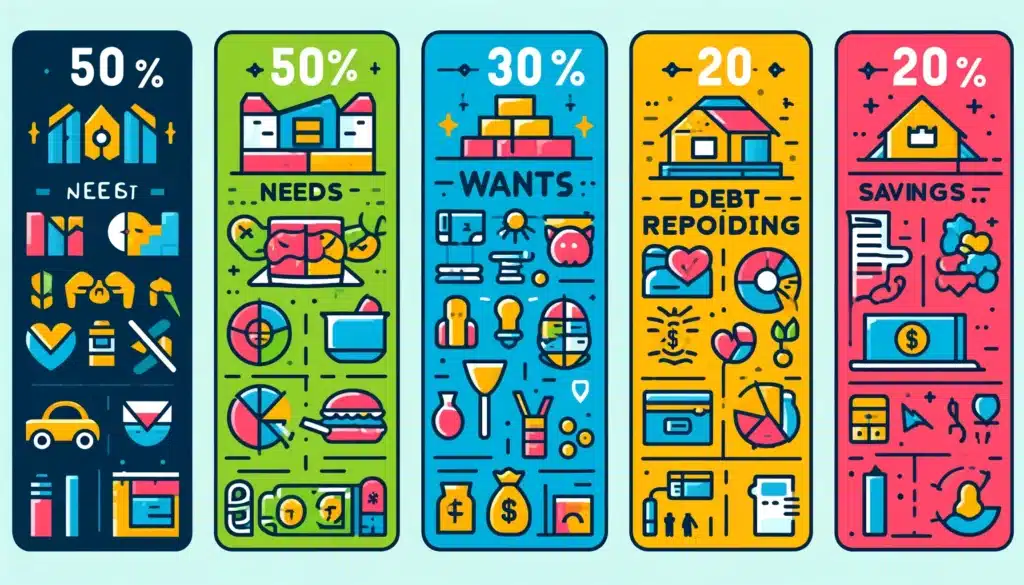
According to the 50/20/30 rule, there are three categories of expenditures: essentials, priorities and lifestyle. Your baseline expenditures are those in the essentials category — those that must be paid every month, without which you can’t live. The first costs you’ll want to estimate are:
1. Groceries
For your baseline, include the lowest food cost that is reasonable for your circumstances. Plan your grocery expenditures without any extras, like restaurants, coffee shops (unless you must use them to have business meetings or to avoid paying for internet at home), wine or fast-food pit stops. If you’ll be couponing and cutting back your food costs, take that into account, but if you know you won’t clip a single square, be realistic about your cost estimates. One of the best ways to get an estimate is to track your spending for at least a few weeks to get an idea of how and where you spend.
2. Housing and utilities
For almost everyone, essential expenses include rent or mortgage. If you’re responsible for either, or if you house-share, live for free or have a sliding rent arrangement, include your minimum monthly housing cost in your baseline. Make sure to include the monthly amount for homeowner’s insurance and property tax bills in your total.
If you live in a geographic region in which heating or air-conditioning is a life essential, include these average monthly bills in your baseline. In moderate regions, utility costs are a lifestyle choice — but heat isn’t optional in January in Vermont.
The same goes for internet and phone costs: If you work from home, they’re most likely a necessity, and should be included in your housing and utility estimate.
3. Medical costs
A note about health insurance: The number-one reason people go bankrupt is because of medical costs, so it could not be more important that you have some form of health insurance. You should include these costs in your baseline estimate, as well as payments for any outstanding medical bills.
4. Transportation
Do you need to include transportation to work in your baseline? Consider the lowest possible transportation cost given your job or jobs. Do you absolutely need a car, car loan payments, auto insurance, maintenance, garaging costs and gas expenses? Or is there great public transportation in your city? Can you walk to work? Telecommute? Can you infrequently taxi, Uber, ride-share, Zipcar or call for delivery? Again: Be realistic with your estimate. If you’re actually going to drive your SUV alone, round-trip, every day, factor that into the costs.
Add up the baseline numbers, and you have the amount of the monthly “paycheck” you’ll write to yourself.
Step two: Set your income target
This step is easy (well … sort of). Once you know your monthly baseline expenditures — and thus the paycheck you’ll write to yourself each month — use an online tax calculator to get a rough idea of how much you’ll owe in taxes. Add this new number to your baseline costs.
This figure represents your bare-bones monthly income requirement.
The tricky part, of course, is guaranteeing you have enough income to meet your expenses.
Anything above the bare-bones income target goes first to your financial priorities savings; second to your emergency fund savings; and third to you as “bonus” to spend on lifestyle choices.
Step three: Set up separate bank accounts
To make this plan most effective, you’ll want to set up separate bank accounts. Your bank will let you have as many accounts as you need, and if you maintain a minimum balance in all the accounts combined, it should waive fees (just as it would if you maintained a minimum balance in a single account).
1. Business checking
Here you’ll have your checks auto-deposited, you’ll plunk your daily cash from tips if you get them, and you’ll deposit your invoice payments from clients. You’ll make only three transfers from this account each month: one to each of the below accounts.
2. Personal checking
From this account, you’ll pay all your bills — essentials, priorities and lifestyle — but you won’t spend more than you’ve paid yourself any month. This account will also receive any monthly “bonus” you might want to pay yourself when your income exceeds your target, and you have money left to spend beyond your savings (which is technically a fourth transfer).
3. Emergency savings
Every month, after you’ve paid yourself for your baseline and transferred amounts for financial priorities, you’ll put money into your emergency fund.
You should be aiming to save at least six months of net income in this account, to be used in the following situations only:
- You’ve lost your job, and need to continue paying rent, bills and other living expenses.
- You have a medical or dental emergency.
- Your car breaks down, and it’s your primary form of transportation.
- You have emergency home expenses — e.g., your AC breaks down in 100°F-plus weather, your roof is leaking, your basement is flooded, your toilet is overflowing, etc.
- You have bereavement-related expenses, like travel costs for a family funeral.
4. Priority savings
This account holds money for annual or semiannual payments (income taxes, property taxes, home insurance) and for important goals — payments on student loans, the down payment for a house, or college savings for your child.
That’s it! You now have a basic budget, your income target and where exactly your money should go … no matter how it comes in.
Additional stories from LearnVest:
Why I Would Never Buy a New Car
What do you do with your windfalls?

This post is from new staff writer William Cowie.
A few weeks ago, the lottery jackpot was almost $600 million. Did you buy a ticket? If you’re like millions of others, the answer would be yes. As the size of the jackpot climbs, more people buy tickets.
Why? The “big pot” Powerball ticket costs the same ($2) as the one paying the minimum of $40 million, and the odds are identical (lousy). So, why do more people buy tickets when the pot becomes larger? Is $40 million not enough? (“Nah, $40 million isn’t what it used to be. I’m not wasting my time on one of those!”) It may not be the pinnacle of logic, but when the jackpot swells, so do the sales of tickets.
Odds are you ended up not winning the big one and its $375 million estimated cash value. If you did, you wouldn’t be reading this. (By the way, isn’t it interesting: if anybody should be reading this, it’s the winner of that fortune, and if there is someone almost guaranteed not to read anything about personal finance or investing, it will be that winner. Go figure.)
So you didn’t win the big one. In fact, you probably haven’t won any lottery.
But there is something you get which you may be overlooking: windfalls.
Windfalls
You might never win a lottery, but odds are you’ll receive many a windfall in the course of your lifetime.
Nobody ever talks about it, but it’s true: we all get windfalls from time to time. Sometimes it’s a gift, sometimes a bonus. Sometimes mom and dad simply give their kids a little handout. It could be a rebate check from a utility or a small prize in a charity raffle. Some are small and some not so small. Whatever it is, we all get windfalls.
We don’t get them all the time. But we all get them. The essence of a windfall is it’s unexpected. But what’s not unexpected is that almost all of us get them.
The important question is: what do you do with your windfalls?
Your mindset
What you do with your windfalls says a lot about your mindset about money. You know what they say: actions speak louder than words. Nowhere is that as true as what happens to your windfalls.
What’s your first, no-brainer, reaction to getting money unexpectedly? Head to the clothing store for that outfit you’ve had your eyes on? A lovely dinner out? If you’re a spender, your no-brainer use of a windfall is to spend it.
But, if you’re an investor, your no-brainer use of a windfall is to invest it.
Okay, what did you do with, say, your last three windfalls? Can you even remember what they were? If you can’t remember, just close your eyes and imagine getting a $100 refund check. What would you do with it? Nobody’s watching so you don’t have to be politically correct. What’s the thing that makes your heart leap the most? Don’t think about what duty calls you to do. What made your heart skip a beat?
That’s a good indicator of your passion where money is concerned.
Why is this important?
Windfall crystal ball
Where people are today financially is a very good predictor of where they’ll be in the future. So, if you spent your windfalls, odds are you’re not wealthy.
Ouch. The first time somebody pointed that out to me, it stung. I fancied myself as someone responsible, but when I looked back, there was more spending than saving in my windfall record. And it showed in my financial status (or rather, lack thereof).
Consider the squirrel in the picture above: she grabs every acorn she can find, and puts it away. If you’re a saver or investor, you put away every loose acorn you come across. Anybody should be able to do it: you’re already getting by without the windfall, so if there’s ever a perfect bit of money to put away, it’s those windfalls.
None of us may win the lottery, but each windfall brings a spare acorn or two.
Where do you put those acorns?
It’s hard to find a better place than the old-fashioned savings account. If your investment of choice is rental properties, there’s not much you can do with, say, $200. Or you may not be able to buy a block of Apple shares.
But you can put it into your savings account. Yep, that’s right, old faithful.
A savings account is a wonderful staging area for investing. You can accumulate any amounts, big or small, until the balance reaches a critical mass, at which point you can deploy the funds into a higher-yielding investment.
Once you open your eyes for those windfalls, and you put each one into your savings account, you’d be surprised to see how those turbocharge the balance.
Your next windfall may be unexpected. But you can decide ahead of time where you’re going to put it, no matter how big or small.
Forewarned is forearmed.
Top Cards by Category
The new Discover it card is out to change the way people think about credit cards. No annual fee. No overlimit fee. No foreign transaction fee & no pay-by-phone fee. No late fee on your first late payment. And Discover won't increase your APR for paying late.*
Bonus Miles: Earn 30,000 bonus miles toward Award Travel after you spend $500 on the Card within the first three months of Cardmembership. Earn As You Spend: Get 2X miles on Delta purchases and 1X miles for all other eligible dollars spent.
The new Discover it card is out to change the way people think about credit cards. No annual fee. No overlimit fee. No foreign transaction fee & no pay-by-phone fee. No late fee on your first late payment. And Discover won't increase your APR for paying late.*
The SimplyCash(R) Business Card from American Express aims to help your business succeed with a generous cash-back rewards program. Many businesses can benefit from cash back categories such as U.S. office supply stores, wireless telephone services purchased directly from U.S. service providers and U.S. gas stations. This card not only offers a low introductory purchase APR but also doesn't charge an annual fee.
The new Discover it card is out to change the way people think about credit cards. No annual fee. No overlimit fee. No foreign transaction fee & no pay-by-phone fee. No late fee on your first late payment. And Discover won't increase your APR for paying late.*
- How to Become a Millionaire
- How to Get Out of Debt
- The Best Dollars I've Ever Spent
- How Our Estate Plan is Structured
- How We Paid Our Mortgage In Less than 10 Years
- Money Making Ideas
- How to Manage Your Asset Allocation with Multiple Accounts
- Consumption Smoothing - Save While the Saving's Good
- How to Save on Groceries
- How Much Life Insurance Do You Need?
- Eleven Great Books About Money
- Dave Ramsey is Bad at Math
- Dish Network Customer Service SUCKS
- $8,000 Homebuyer Tax Credit
- Pay Off Mortgage Early or Invest?
- How to Claim the First-Time Homebuyer Tax Credit
- Termite Control: Sentricon vs. Termidor
- How Much Should You Pay a Babysitter?
- Reduced Credit Limits? Share Your Experience
- Ethanol Blended Gas = Lower Mileage?
- $15,000 Homebuyer Tax Credit
- Buying Furniture off the Back of a Truck
- Will Mac OS X Lion Kill Quicken 2007?
How to save money on insurance
- Can you afford an international retirement living?
- How to help your family after you are gone
- Will Social Security be gone before I retire?
- Refund, or no refund?
- This battle of the sexes has no winner
- What to look for when buying an energy-efficient home
- The hidden savings in a rent payment
- How to save money on vacations using social media and new technologies
- How to budget without regular paychecks
- What do you do with your windfalls?